
- News Feed
- EXPLORE
- Pages
- Events
- Marketplace
- Funding
-
 Street League
-
 Music
Music
-
 TV
TV















 French
 Portuguese
Recent Updates
-
#JeleleRapLeagueJELELECYPHER ft BLACKRACE RECORDZ X TIMBUKTU LIBRARY JULY 2025
Featuring Venom, SizeKilla, Joey Tragics and Thobisa
#jelelecypher
Content is brought to you by viewers like you. Show your love by sending us a tip0 Comments 0 Shares 4K Views 392 0 Reviews 2
2
-
One of the best from the Kingdom!One of the best from the Kingdom!Catch up with all the episodes, now on JeleleTV...
https://tv.jelele.com/title/jelele-studio1-season-1/ 0 Comments 0 Shares 4K Views 0 Reviews1
-
HOW TO JOIN THE LEAGUE...
In a few simple steps, you're in! Create your profile. Drop your bars. Let the streets decide...
#JeleleRapLeague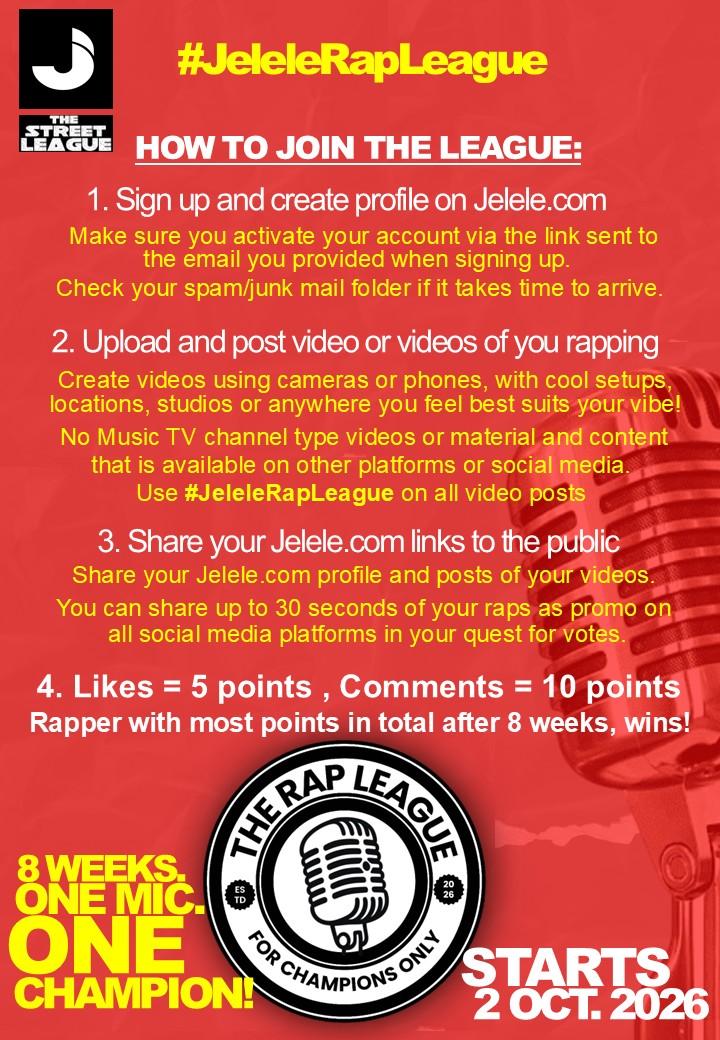 1 Comments 0 Shares 4K Views 0 Reviews1
-
STANDARD BANK LUJU FOOD AND LIFESTYLE FESTIVAL 2026: WHERE AFRICAN CULTURE, FLAVOUR, FASHION AND MUSIC CAME ALIVE IN MALKERNS
Inside Eswatini’s most stylish celebration of food, fashion, music and African creativity
MALKERNS, ESWATINI — There are festivals you attend, and then there are festivals you experience.
For two unforgettable days, the Malkerns Valley became a canvas for African creativity as the Standard Bank Luju Food & Lifestyle Festival 2026 brought together music, fashion, food, culture and some of the region’s most exciting creative minds.
Held on 1 and 2 August at House on Fire, this year's edition embraced the theme “A Return to the African Future” a concept that captured the essence of Luju itself: looking back to African heritage while confidently imagining what comes next.
From the food served at the culinary experiences to the designs on the runway, the artists commanding the stages and the guests turning the festival grounds into a moving fashion editorial, Luju 2026 was a celebration of Africa in all its complexity and beauty.
Luju is where heritage meets modernity, where African stories are not simply remembered, but reimagined.
A CELEBRATION THAT BEGINS WITH THE GUESTS
The Luju experience begins long before the first note is played.
It begins with the arrival.
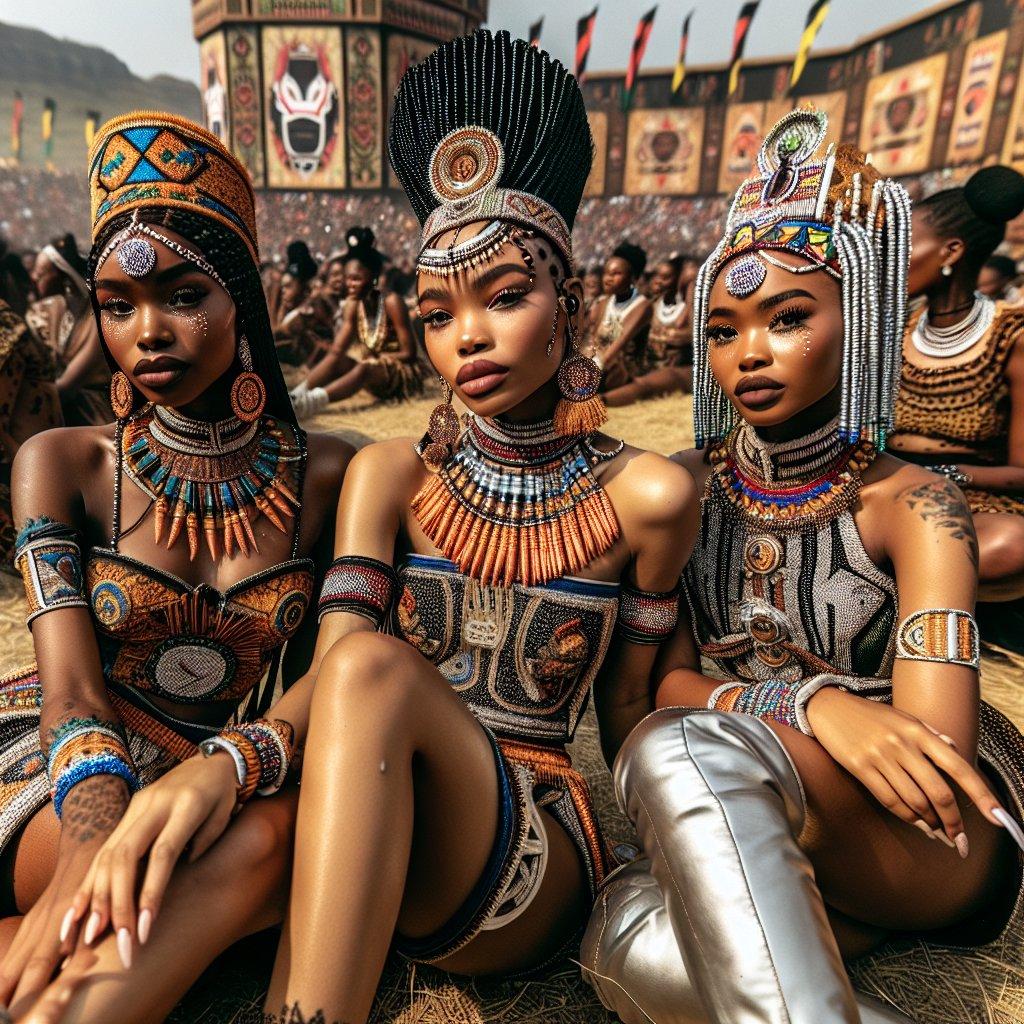
Across the Malkerns grounds, guests embraced the opportunity to express themselves through fashion, colour and personality. Contemporary African prints, flowing silhouettes, statement accessories, tailored pieces and heritage-inspired looks transformed the festival grounds into an open-air showcase of personal style.
The atmosphere was effortlessly sophisticated yet distinctly African.
Among the guests were creatives, entrepreneurs, business leaders, food enthusiasts, fashion lovers, music fans and cultural tastemakers from Eswatini and across the region.
The diversity of the crowd is part of what makes Luju special. A chef could be found in conversation with a designer; a musician could be sharing a table with a business executive; and a young creative could find themselves networking with an established industry leader.
It is this intersection of culture and connection that has helped Luju grow beyond the traditional festival experience.
THE CULINARY STORY: NGUNI FOODWAYS
Food at Luju has never been merely about eating.
It is about memory.
It is about identity.
It is about the stories that survive through recipes, ingredients and generations.
This year's culinary programme, “Nguni Foodways,” explored the traditions and food heritage connecting Nguni communities across Southern Africa, while giving chefs the freedom to reinterpret those traditions through contemporary culinary techniques.
The result was a programme that felt both deeply rooted and refreshingly modern.
Guests were treated to experiences including Thobile Makhoyane's Nguni Mcombotsi Circle, while Zimbabwean chef Prince Sivalo Mahlangu explored ancestral ingredients, foraging and fermentation through Ancestral Forage & Ferments.
Acclaimed South African chef Mmabatho Molefe brought her distinctive interpretation of Nguni cuisine to the festival through an elevated fine-dining experience, while Eswatini's own Chef Sive Bhembe introduced an Nguni-inspired dessert experience.
The culinary programme was further enriched by Coco & J, whose Afroguese concept combined food, storytelling and music.
The result was an experience that demonstrated that African cuisine can honour tradition while embracing innovation.
At Luju, the plate becomes a passport into African memory.
FASHION: ONCE UPON A TIME
If food carried the stories of generations, fashion gave those stories a new silhouette.
This year's fashion theme, “Kwasukasukela – Once Upon a Time,” invited designers and festivalgoers to draw inspiration from African folklore, heritage, nature and stories passed down through generations.
The result was one of the weekend's most visually captivating experiences.
Acclaimed South African designer Mzukisi Mbane, founder and creative director of Imprint South Africa, brought an Afro-futurist perspective to the programme, perfectly complementing the festival's theme of reconnecting with African heritage while looking towards the future.
But perhaps one of the most significant aspects of this year's fashion programme was the spotlight placed on Eswatini's own designers.
Eleven local designers were given a platform to showcase their creativity, including Adonis Threads by Calvin DuPont, Black Degree by Kwenzie Zwane, Flow Wearz by Zikode Zwane, Philz Creations by Philile Nkwanyana, Rose Peti by Nothando Dlamini, Tash Creations by Thando Ndlangamandla, Uniq_uity by Sinakekelwe Mhlanga, Zerushi by Zen Shiba, Karo Textile by Nomfundo Simelane, Batfobile Edit by Batfobile Dlamini and Wels Craft by Welile Dlamini.
Their collections reflected an emerging generation of Eswatini designers who are increasingly confident in using fashion to communicate identity, culture and contemporary African expression.
The runway also extended into the audience, where festivalgoers interpreted the theme in their own distinctive ways.
This year's Best Dressed competition celebrated two guests who particularly captured the spirit of Luju fashion. Bafana Mavimbela was crowned Best Dressed Male, while Lindo Dlamini took the title of Best Dressed Female.
Both brought individuality, confidence and African-inspired creativity to their looks, earning them well-deserved recognition.
Congratulations to Bafana Mavimbela and Lindo Dlamini for setting the style standard at Luju 2026.
At Luju, fashion is not simply what you wear. It is the story you choose to tell.
MUSIC: THE SOUNDTRACK OF AN AFRICAN FUTURE
And then there was the music, the heartbeat of Luju.
Across the two days, the stages became meeting points for generations, genres and cultures, with performances that moved effortlessly between hip-hop, soul, jazz, maskandi, kwaito, Afro-soul and contemporary African sounds.
Nasty C brought the energy of contemporary African hip-hop to the Malkerns Valley, commanding the stage with the confidence and intensity that have made him one of the continent's most recognisable young artists.
His performance was complemented by the soulful storytelling of Wandile Mbambeni, whose folk and country influences created a more intimate musical atmosphere and offered audiences a moment to slow down and simply listen.
For many festivalgoers, Bholoja represented something particularly special. The Eswatini-born pioneer of Swazi Soul brought his distinctive blend of contemporary African folk and storytelling to the stage, delivering a performance rooted firmly in homegrown identity.
His presence captured something central to Luju's philosophy: Africa's creative future must remain connected to its own voice.
The cultural richness continued with Shwi Mantombazana, whose performance brought traditional Zulu musical storytelling to the festival and created a bridge between generations.
Mandisi Dyantyis added a sophisticated jazz dimension to the programme, giving music lovers an opportunity to appreciate the musicianship and emotional depth of his sound, while Tribal Natives brought a more energetic contemporary African rhythm to the festival grounds.
Then came the nostalgia.
The appearance of South African kwaito legend Zola 7 transported many festivalgoers back to an era of iconic township sounds and unforgettable songs. His performance connected generations, with longtime fans singing along while younger audiences experienced the energy of a musical era that continues to influence African popular culture.
One of the most talked-about moments of the weekend came when Liquideep joined forces to perform their new track live for the first time.
It was more than a performance. It was a Luju moment.
The audience had the privilege of witnessing it first live presentation, adding an element of exclusivity and surprise to an already impressive musical programme.
And as the weekend drew to a close, Zakes Bantwini brought the festival home with a commanding performance that transformed the final stretch of Luju into one enormous celebration.
The Grammy Award-winning artist delivered exactly the kind of high-energy finale the occasion demanded, leaving festivalgoers dancing, singing and reluctant to let the weekend end.
From Swazi Soul to kwaito, jazz and contemporary hip-hop, Luju's soundtrack proved that African music has no single soundSTANDARD BANK LUJU FOOD AND LIFESTYLE FESTIVAL 2026: WHERE AFRICAN CULTURE, FLAVOUR, FASHION AND MUSIC CAME ALIVE IN MALKERNS Inside Eswatini’s most stylish celebration of food, fashion, music and African creativity MALKERNS, ESWATINI — There are festivals you attend, and then there are festivals you experience. For two unforgettable days, the Malkerns Valley became a canvas for African creativity as the Standard Bank Luju Food & Lifestyle Festival 2026 brought together music, fashion, food, culture and some of the region’s most exciting creative minds. Held on 1 and 2 August at House on Fire, this year's edition embraced the theme “A Return to the African Future” a concept that captured the essence of Luju itself: looking back to African heritage while confidently imagining what comes next. From the food served at the culinary experiences to the designs on the runway, the artists commanding the stages and the guests turning the festival grounds into a moving fashion editorial, Luju 2026 was a celebration of Africa in all its complexity and beauty. Luju is where heritage meets modernity, where African stories are not simply remembered, but reimagined. A CELEBRATION THAT BEGINS WITH THE GUESTS The Luju experience begins long before the first note is played. It begins with the arrival. Across the Malkerns grounds, guests embraced the opportunity to express themselves through fashion, colour and personality. Contemporary African prints, flowing silhouettes, statement accessories, tailored pieces and heritage-inspired looks transformed the festival grounds into an open-air showcase of personal style. The atmosphere was effortlessly sophisticated yet distinctly African. Among the guests were creatives, entrepreneurs, business leaders, food enthusiasts, fashion lovers, music fans and cultural tastemakers from Eswatini and across the region. The diversity of the crowd is part of what makes Luju special. A chef could be found in conversation with a designer; a musician could be sharing a table with a business executive; and a young creative could find themselves networking with an established industry leader. It is this intersection of culture and connection that has helped Luju grow beyond the traditional festival experience. THE CULINARY STORY: NGUNI FOODWAYS Food at Luju has never been merely about eating. It is about memory. It is about identity. It is about the stories that survive through recipes, ingredients and generations. This year's culinary programme, “Nguni Foodways,” explored the traditions and food heritage connecting Nguni communities across Southern Africa, while giving chefs the freedom to reinterpret those traditions through contemporary culinary techniques. The result was a programme that felt both deeply rooted and refreshingly modern. Guests were treated to experiences including Thobile Makhoyane's Nguni Mcombotsi Circle, while Zimbabwean chef Prince Sivalo Mahlangu explored ancestral ingredients, foraging and fermentation through Ancestral Forage & Ferments. Acclaimed South African chef Mmabatho Molefe brought her distinctive interpretation of Nguni cuisine to the festival through an elevated fine-dining experience, while Eswatini's own Chef Sive Bhembe introduced an Nguni-inspired dessert experience. The culinary programme was further enriched by Coco & J, whose Afroguese concept combined food, storytelling and music. The result was an experience that demonstrated that African cuisine can honour tradition while embracing innovation. At Luju, the plate becomes a passport into African memory. FASHION: ONCE UPON A TIME If food carried the stories of generations, fashion gave those stories a new silhouette. This year's fashion theme, “Kwasukasukela – Once Upon a Time,” invited designers and festivalgoers to draw inspiration from African folklore, heritage, nature and stories passed down through generations. The result was one of the weekend's most visually captivating experiences. Acclaimed South African designer Mzukisi Mbane, founder and creative director of Imprint South Africa, brought an Afro-futurist perspective to the programme, perfectly complementing the festival's theme of reconnecting with African heritage while looking towards the future. But perhaps one of the most significant aspects of this year's fashion programme was the spotlight placed on Eswatini's own designers. Eleven local designers were given a platform to showcase their creativity, including Adonis Threads by Calvin DuPont, Black Degree by Kwenzie Zwane, Flow Wearz by Zikode Zwane, Philz Creations by Philile Nkwanyana, Rose Peti by Nothando Dlamini, Tash Creations by Thando Ndlangamandla, Uniq_uity by Sinakekelwe Mhlanga, Zerushi by Zen Shiba, Karo Textile by Nomfundo Simelane, Batfobile Edit by Batfobile Dlamini and Wels Craft by Welile Dlamini. Their collections reflected an emerging generation of Eswatini designers who are increasingly confident in using fashion to communicate identity, culture and contemporary African expression. The runway also extended into the audience, where festivalgoers interpreted the theme in their own distinctive ways. This year's Best Dressed competition celebrated two guests who particularly captured the spirit of Luju fashion. Bafana Mavimbela was crowned Best Dressed Male, while Lindo Dlamini took the title of Best Dressed Female. Both brought individuality, confidence and African-inspired creativity to their looks, earning them well-deserved recognition. Congratulations to Bafana Mavimbela and Lindo Dlamini for setting the style standard at Luju 2026. At Luju, fashion is not simply what you wear. It is the story you choose to tell. MUSIC: THE SOUNDTRACK OF AN AFRICAN FUTURE And then there was the music, the heartbeat of Luju. Across the two days, the stages became meeting points for generations, genres and cultures, with performances that moved effortlessly between hip-hop, soul, jazz, maskandi, kwaito, Afro-soul and contemporary African sounds. Nasty C brought the energy of contemporary African hip-hop to the Malkerns Valley, commanding the stage with the confidence and intensity that have made him one of the continent's most recognisable young artists. His performance was complemented by the soulful storytelling of Wandile Mbambeni, whose folk and country influences created a more intimate musical atmosphere and offered audiences a moment to slow down and simply listen. For many festivalgoers, Bholoja represented something particularly special. The Eswatini-born pioneer of Swazi Soul brought his distinctive blend of contemporary African folk and storytelling to the stage, delivering a performance rooted firmly in homegrown identity. His presence captured something central to Luju's philosophy: Africa's creative future must remain connected to its own voice. The cultural richness continued with Shwi Mantombazana, whose performance brought traditional Zulu musical storytelling to the festival and created a bridge between generations. Mandisi Dyantyis added a sophisticated jazz dimension to the programme, giving music lovers an opportunity to appreciate the musicianship and emotional depth of his sound, while Tribal Natives brought a more energetic contemporary African rhythm to the festival grounds. Then came the nostalgia. The appearance of South African kwaito legend Zola 7 transported many festivalgoers back to an era of iconic township sounds and unforgettable songs. His performance connected generations, with longtime fans singing along while younger audiences experienced the energy of a musical era that continues to influence African popular culture. One of the most talked-about moments of the weekend came when Liquideep joined forces to perform their new track live for the first time. It was more than a performance. It was a Luju moment. The audience had the privilege of witnessing it first live presentation, adding an element of exclusivity and surprise to an already impressive musical programme. And as the weekend drew to a close, Zakes Bantwini brought the festival home with a commanding performance that transformed the final stretch of Luju into one enormous celebration. The Grammy Award-winning artist delivered exactly the kind of high-energy finale the occasion demanded, leaving festivalgoers dancing, singing and reluctant to let the weekend end. From Swazi Soul to kwaito, jazz and contemporary hip-hop, Luju's soundtrack proved that African music has no single sound0 Comments 0 Shares 8K Views 0 Reviews2
-
ARTS SUMMITS, ROUNDTABLES AND CONFERENCES - DO WE NEED THEM?
by Lebo Hlophe
In a world where the creative sector is increasingly recognized for its economic potential, arts summits and conferences have become indispensable platforms for growth and innovation. These events gather thought leaders, artists, entrepreneurs, and cultural policymakers, creating an environment where ideas flourish and opportunities emerge. But beyond the inspirational talks and workshops, arts summits serve as a critical tool for building vibrant, sustainable local creative industries.
One of the most valuable aspects of these events is the access they provide to new knowledge and ideas. Attendees can learn about the latest trends in the arts, explore funding opportunities, and gain insights into global and regional creative landscapes. However, simply attending these conferences is not enough. To make the most of the experience, participants should take a proactive approach. Keep a notebook or digital device handy to record key takeaways. When engaging with speakers, ask questions that connect the event's themes to your own community or industry.
Networking is another essential component of arts summits. These events bring together professionals from various sectors, offering an unparalleled opportunity to form collaborations, find mentors, and build lasting relationships. It’s crucial to approach networking strategically—focus on quality over quantity. Look for individuals whose work aligns with your values or goals and find ways to collaborate on projects that have the potential to elevate your local creative industry.
Using the knowledge and connections gained, return to your community with a clear action plan. Leverage the newfound insights to propose initiatives that can drive local creativity, such as workshops, mentorship programs, or partnerships between creatives and local businesses. Furthermore, advocating for policy support, such as funding for local artists or public art projects, can help strengthen the creative ecosystem.
Arts summits and conferences are not just about learning—they are about transforming that knowledge into real-world impact, ensuring the growth and sustainability of local creative industries for years to come.
 0 Comments 0 Shares 6K Views 0 Reviews2
-
MTN Bushfire Firefly Applications Now Open!
MTN Bushfire is thrilled to announce that applications are open for the 8th edition of the hottest music talent competition for Eswatini’s #YoungGiftedFree, MTN Bushfire Firefly.
MTN Bushfire is calling on young artists in Eswatini to send their music recordings to be considered for the Firefly competition. The Top Three winners will perform live at the MTN Bushfire Festival, which will be held from 30 May to 1 June, 2025.
MTN Bushfire Firefly creates a music space with no limitations for the #YoungGiftedFree to freely express themselves by sharing their musical creativity and lyrical authenticity. The #YoungGiftedFree are trailblazers who dream big and hustle hard. Vocalists, singers and rappers aged between 16 and 35 years are invited to submit their music recordings for a chance to be part of MTN Bushfire Firefly.
Applications for this year’s edition of the competition are now open via the Firefly page on the MTN Bushfire website (www.bush-fire.com/firefly). Applicants are required to send two tracks for consideration and their Electronic Press Kit (EPK)/bio either in PDF format or via a web link.
Applications close on Friday, 7 March, 2025.
Launched in 2017, MTN Bushfire Firefly is a powerful manifestation of MTN Bushfire’s Bring Your Fire call to action for positive social and environmental change. The competition is an expression of the festival’s arts development pillar which has inspired conscious and tangible efforts to create sustained access to the arts for Eswatini’s youth.
Over the years, the competition has established an inspiring track record of unearthing, promoting and supporting emerging talent by giving the youth a credible platform to share their music to wide audiences.
To date, the music competition has empowered over 100 up-and-coming artists, most of whom have used this opportunity to elevate their musical careers and become recognised artists in Eswatini’s music industry.
Each year, 20 artists are selected from the applications and promoted across MTN Bushfire’s social media platforms and affiliate festival platforms to grow their reach and awareness. The Top 10 artists are then selected by public vote to perform for a live audience at the MTN Bushfire Firefly Grand Finale which will be taking place on 24 April, 2025. The Top 3 winners will each receive exciting prizes, career opportunities and the grand prize of a performance slot at the MTN Bushfire festival.
The final adjudication process at the Firefly Grand Finale involves a combination of expert industry judges and public online votes. Voting will be conducted via the MTN Bushfire Firefly channel on the AYOBA app. For your streaming and voting convenience, personalised MTN Pulse data bundles will be available for purchase throughout the series. More information can be found on the MTN Bushfire website.
To learn more about the competition and how to enter, download the Ayoba app from https://i.ayo.ba/YgBb/mtnfirefly and subscribe to the MTN Bushfire Firefly channel. We have exciting giveaways and informative music business news that will positively grow the music industry in Eswatini.
SIDEBARS:
Who Can Apply?
o Artists aged 16 – 35 years
o Artist must have at least two recorded songs for consideration
o Resident of Eswatini
o Performance experience preferred
o Applications are not open to DJs
How It Works
o 11 Feb – 7 Mar: Applications open
o 11 Mar – 26 Mar: Top 20 announcement and voting commences on AYOBA
o 28 Mar – 20 Apr: Top 10 announcement and voting continues on AYOBA
o 24 Apr – MTN Bushfire Firefly Grand Finale
o 30 May – 1 June: The Top 3 perform at the MTN Bushfire festival
Artist Benefits
• Top 20 - Music promotion on international platforms
• Top 20 - Access to MTN CallerTunes on-boarding
• Top 20 - Arts Round Table participation opportunity
• Top 10 - Performance at the Firefly Top 10 Grand Finale with expense stipend
• Top 10 - Branded Merchandise
• Top 3 - Mobile phones sponsored by MTN Eswatini
• Top 3 - Performance slot at the MTN Bushfire Festival with expense stipendMTN Bushfire Firefly Applications Now Open! MTN Bushfire is thrilled to announce that applications are open for the 8th edition of the hottest music talent competition for Eswatini’s #YoungGiftedFree, MTN Bushfire Firefly. MTN Bushfire is calling on young artists in Eswatini to send their music recordings to be considered for the Firefly competition. The Top Three winners will perform live at the MTN Bushfire Festival, which will be held from 30 May to 1 June, 2025. MTN Bushfire Firefly creates a music space with no limitations for the #YoungGiftedFree to freely express themselves by sharing their musical creativity and lyrical authenticity. The #YoungGiftedFree are trailblazers who dream big and hustle hard. Vocalists, singers and rappers aged between 16 and 35 years are invited to submit their music recordings for a chance to be part of MTN Bushfire Firefly. Applications for this year’s edition of the competition are now open via the Firefly page on the MTN Bushfire website (www.bush-fire.com/firefly). Applicants are required to send two tracks for consideration and their Electronic Press Kit (EPK)/bio either in PDF format or via a web link. Applications close on Friday, 7 March, 2025. Launched in 2017, MTN Bushfire Firefly is a powerful manifestation of MTN Bushfire’s Bring Your Fire call to action for positive social and environmental change. The competition is an expression of the festival’s arts development pillar which has inspired conscious and tangible efforts to create sustained access to the arts for Eswatini’s youth. Over the years, the competition has established an inspiring track record of unearthing, promoting and supporting emerging talent by giving the youth a credible platform to share their music to wide audiences. To date, the music competition has empowered over 100 up-and-coming artists, most of whom have used this opportunity to elevate their musical careers and become recognised artists in Eswatini’s music industry. Each year, 20 artists are selected from the applications and promoted across MTN Bushfire’s social media platforms and affiliate festival platforms to grow their reach and awareness. The Top 10 artists are then selected by public vote to perform for a live audience at the MTN Bushfire Firefly Grand Finale which will be taking place on 24 April, 2025. The Top 3 winners will each receive exciting prizes, career opportunities and the grand prize of a performance slot at the MTN Bushfire festival. The final adjudication process at the Firefly Grand Finale involves a combination of expert industry judges and public online votes. Voting will be conducted via the MTN Bushfire Firefly channel on the AYOBA app. For your streaming and voting convenience, personalised MTN Pulse data bundles will be available for purchase throughout the series. More information can be found on the MTN Bushfire website. To learn more about the competition and how to enter, download the Ayoba app from https://i.ayo.ba/YgBb/mtnfirefly and subscribe to the MTN Bushfire Firefly channel. We have exciting giveaways and informative music business news that will positively grow the music industry in Eswatini. SIDEBARS: Who Can Apply? o Artists aged 16 – 35 years o Artist must have at least two recorded songs for consideration o Resident of Eswatini o Performance experience preferred o Applications are not open to DJs How It Works o 11 Feb – 7 Mar: Applications open o 11 Mar – 26 Mar: Top 20 announcement and voting commences on AYOBA o 28 Mar – 20 Apr: Top 10 announcement and voting continues on AYOBA o 24 Apr – MTN Bushfire Firefly Grand Finale o 30 May – 1 June: The Top 3 perform at the MTN Bushfire festival Artist Benefits • Top 20 - Music promotion on international platforms • Top 20 - Access to MTN CallerTunes on-boarding • Top 20 - Arts Round Table participation opportunity • Top 10 - Performance at the Firefly Top 10 Grand Finale with expense stipend • Top 10 - Branded Merchandise • Top 3 - Mobile phones sponsored by MTN Eswatini • Top 3 - Performance slot at the MTN Bushfire Festival with expense stipend0 Comments 0 Shares 5K Views 0 Reviews -
-
-
-
https://i2ba.com/v/hwONoV0 Comments 0 Shares 2K Views 0 Reviews
 8
8
-
-
https://i2ba.xyz/v/VvP1We1 Comments 0 Shares 2K Views 0 Reviews
4
-
#indaba Preparing for take-off!#indaba Preparing for take-off!0 Comments 0 Shares 2K Views 0 Reviews
 3
3








More Stories